Food Delivery Statistics: Market Size & Growth Data
The latest food delivery statistics: a market racing past $1.5 trillion including grocery, three giants consolidating the industry, and photo-backed menus earning up to 44% more monthly sales.
In This Article
- How Smartphones Transformed Food Delivery
- Food Delivery Market Statistics
- The Great Consolidation
- Platform Scale in Numbers
- Why Food Photography Matters
- AI-Powered Solutions
- FAQ
How Smartphones Transformed the Food Delivery Industry
Ten years ago, food delivery meant pizza or Chinese takeaway. Today, online food delivery - restaurant meals plus groceries - is projected to generate $1.51 trillion globally in 2026.[1] Whether you're ordering through Talabat in Dubai, Deliveroo in London, Lieferando in Berlin, or Uber Eats anywhere else, the experience is the same: scroll, tap, wait, eat.
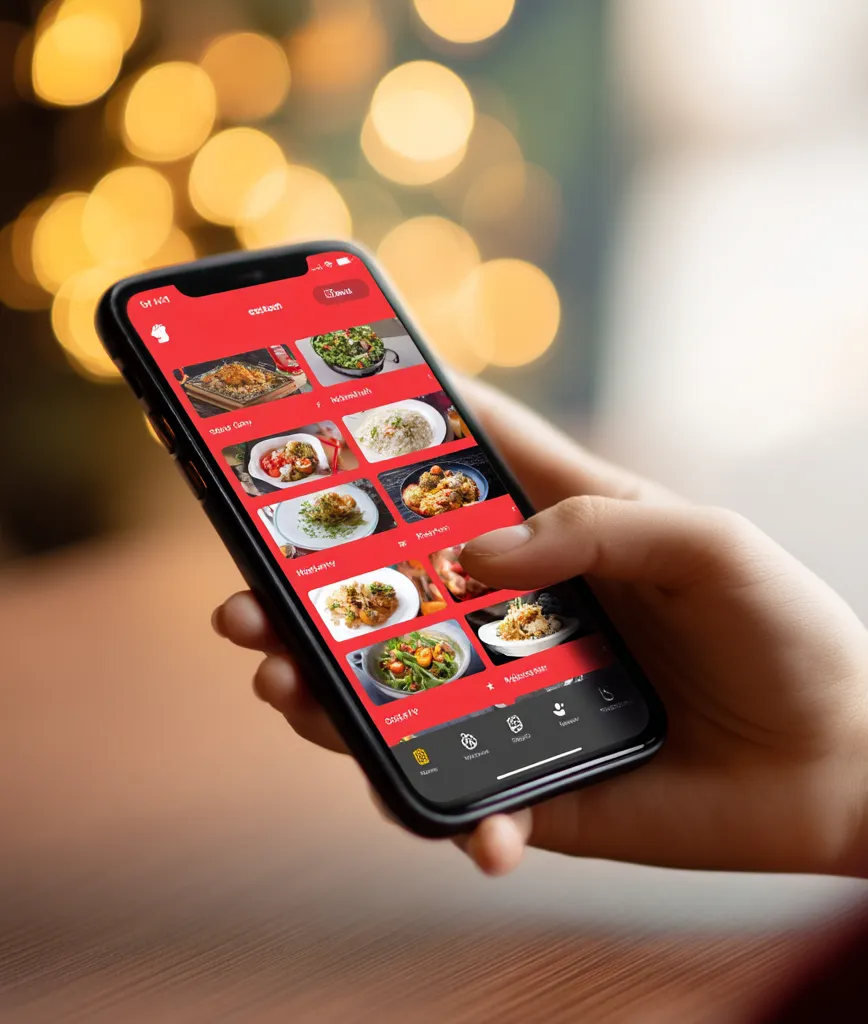 Your menu photos compete against every other restaurant in the app
Food Delivery Market Size & Statistics (2026)
Online food delivery is projected to reach $1.51 trillion in 2026 (including $1.04 trillion of grocery delivery), growing at 6.24% annually toward $2.05 trillion by 2031. Restaurant meal delivery alone is on track to pass $500 billion by 2030.
The numbers that matter:
- Global online food delivery revenue: $1.51 trillion projected for 2026, growing 9.5% this year[1]
- Of that, grocery delivery accounts for about $1.04 trillion - restaurant meal delivery makes up the rest[1]
- Forecast CAGR of 6.24% through 2031, reaching $2.05 trillion[1]
- Meal delivery reaches 29.2% of the world's population in 2026, heading toward 2.6 billion users by 2031[1]
- Restaurant-only delivery market projected to hit $505 billion by 2030 at 9.4% CAGR[2]
- US online food delivery: $473 billion projected for 2026, with 53.9% of Americans using meal delivery[3]
For consumers, delivery has stopped being a treat: 51% of US consumers say delivery and takeout are an essential part of their lifestyle - rising to 67% among Gen Z.[4] For restaurants, that makes the app listing as important as the storefront.
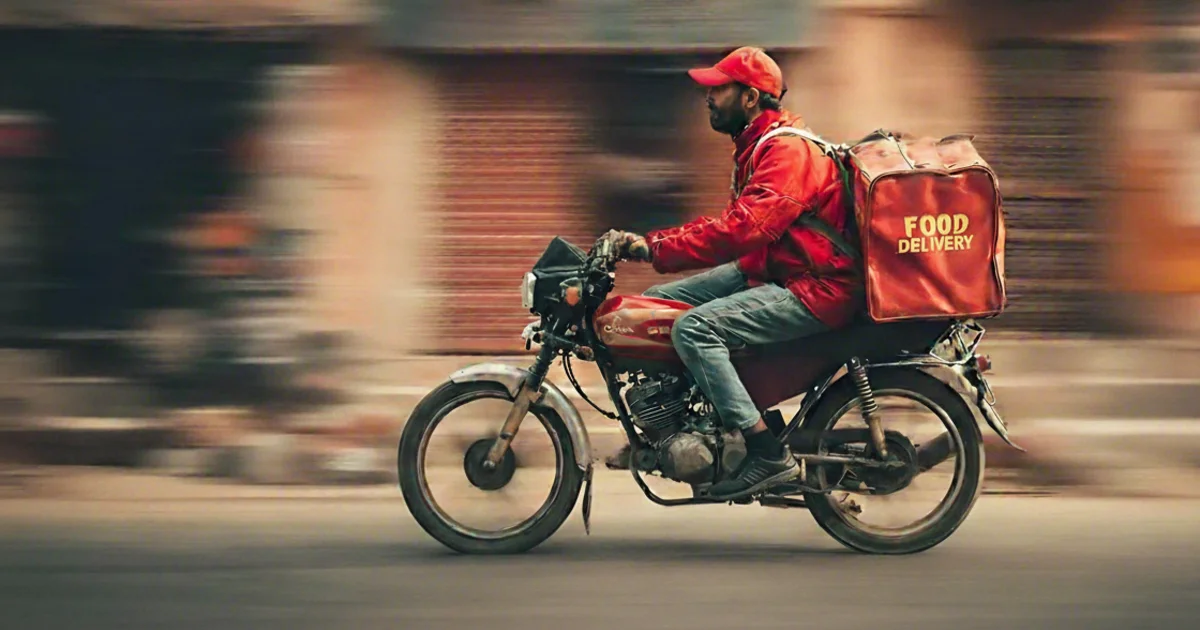 Delivery drivers have become an integral part of the restaurant ecosystem
The Great Consolidation: Three Giants Emerge
2025 reshaped the industry's ownership map: DoorDash bought Deliveroo, Prosus bought Just Eat Takeaway, and Wonder bought Grubhub. Most Western markets now route through three ownership groups plus Uber Eats.
| Owner | Platforms | Deal |
|---|---|---|
| DoorDash | DoorDash, Wolt, Deliveroo | Wolt (2022); Deliveroo for ~£2.8B, closed Oct 2025[5] |
| Prosus | Just Eat Takeaway (Lieferando, Thuisbezorgd), iFood | €4.1B offer, JET delisted Nov 2025[6] |
| Wonder | Grubhub | $650M, closed Jan 2025[7] |
| Uber | Uber Eats | Independent |
The consolidation matters for restaurants in a practical way: fewer, bigger platforms with more standardized requirements - and less negotiating power for individual merchants. Photo specs still differ per platform, though; see the requirements for Uber Eats, DoorDash, Deliveroo, and Wolt.
Platform Scale in Numbers
The latest reported quarters show the scale restaurants are competing inside:
- DoorDash processed 933 million orders in Q1 2026 (+27% year over year) with $31.6 billion in marketplace order value[8]
- That works out to roughly $34 per order on the DoorDash marketplace (calculated from reported Q1 2026 figures)[8]
- Uber's delivery business booked $26 billion in Q1 2026 (+28% year over year), with 50 million Uber One members[9]
- In the Middle East, Talabat reached $9.5 billion in GMV for 2025 (+28%), with revenue of $3.9 billion[10]
- Meituan's Keeta captured about 10% of Saudi Arabia's order volume within four months of launching, before expanding to Qatar, Kuwait, and the UAE in 2025[11]
Growth this fast means more restaurants joining the apps every month - and more listings for your photos to compete against. Operating in the Gulf region? Our UAE food delivery photo guide covers Talabat, Deliveroo, Careem, and Keeta specifically.
Why Food Photography Drives Success on Delivery Apps
DoorDash's own merchant data: menus with item photos see up to 44% more monthly sales, header images add up to 50%, and 46% of Gen Z diners say food photos influence which restaurants they try.[12]
On a delivery app, customers can't smell your food, see your dining room, or ask the waiter what's good. They decide based almost entirely on photos:
- Menus with item photos: up to 44% more monthly sales[12]
- Restaurants with high-quality photos: up to 30% higher sales on average[12]
- Header image on your store page: up to 50% more monthly sales; logo: up to 23%[12]
- 46% of Gen Z diners say food photos influence their decision to try a new restaurant[12]
The 5-Minute Decision Window
Nearly half of customers (49%) decide what to order within 5-10 minutes of opening the app.[13] That's not much time. Your photo needs to work fast.
When ten restaurants sell similar dishes at similar prices, the photo often decides who gets the order. The problem? Professional food photography isn't cheap or quick. A proper photoshoot means hiring a photographer, prepping the kitchen, and blocking out half a day. Even getting the lighting right takes knowledge most restaurant owners don't have. And when the menu changes next month, you're back to square one.
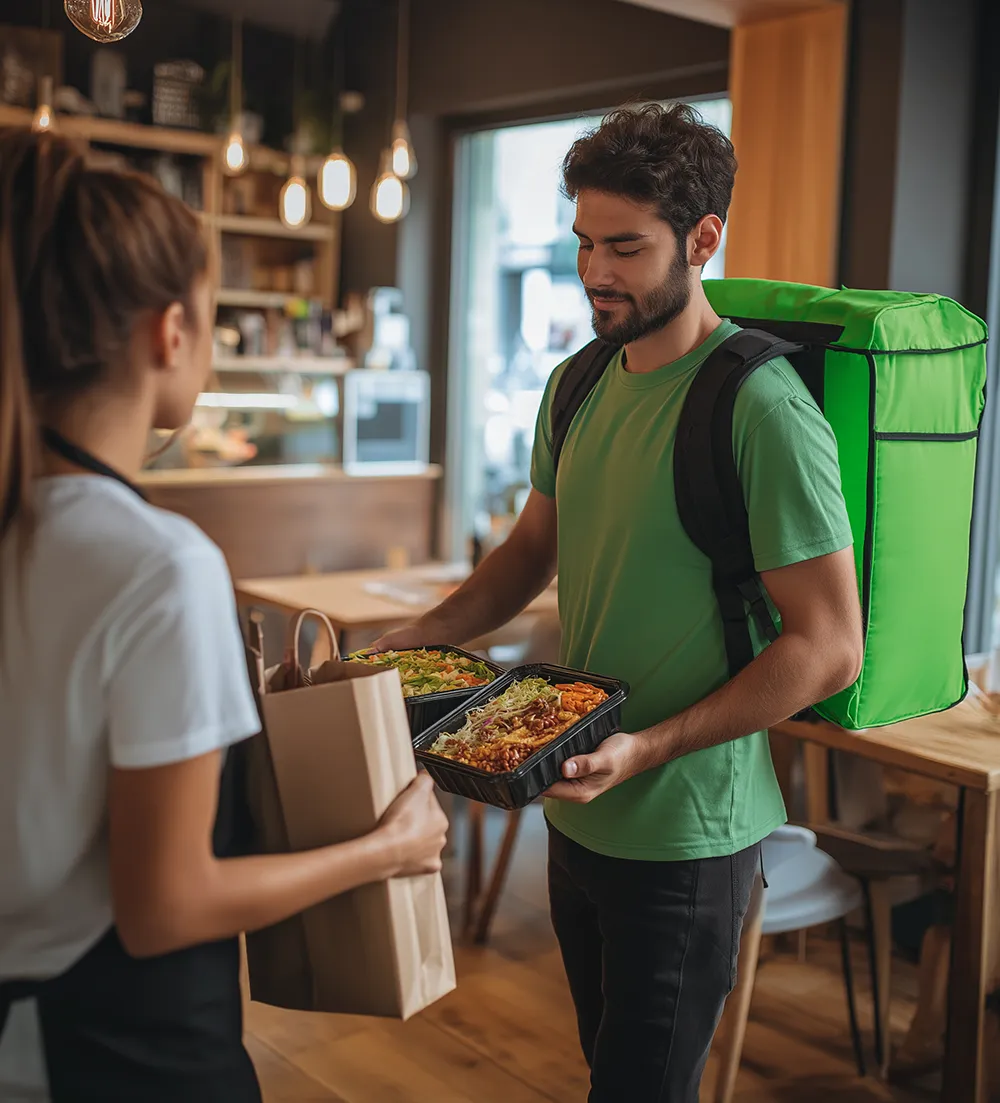 The moment of pickup: where professional food photography meets customer expectations
AI-Powered Food Photography: The Modern Solution
Most restaurant owners don't have the budget for regular professional photoshoots, and shouldn't need one. With AI-enhanced food photography, you can turn your own smartphone photos into clean, professional images without hiring a photographer or learning complex editing software.
The process is straightforward: snap a photo with decent lighting, upload it, and let an AI food photo editor handle the background, colour correction, and polish. The dish stays authentic - you're not generating fake food - but the setting looks like a proper studio shot. Our photo guide covers what makes a good source image.
As delivery apps keep growing, the restaurants with better photos will keep winning more orders. It's not complicated, but it does matter.
Ready to improve your restaurant's delivery app presence? View our pricing or try GourmetPix today.
Frequently Asked Questions
How big is the food delivery market in 2026?
Online food delivery is projected at $1.51 trillion globally for 2026 - though that includes about $1.04 trillion of grocery delivery. Restaurant meal delivery alone is projected to pass $500 billion by 2030.
Who owns the major food delivery platforms?
As of 2026: DoorDash owns Wolt (since 2022) and Deliveroo (since October 2025). Prosus owns Just Eat Takeaway, including Lieferando (completed late 2025). Wonder owns Grubhub (since January 2025). Uber Eats remains part of Uber.
Why do food photos matter on delivery apps?
Because customers can't smell or taste before ordering - they decide based on what they see. DoorDash's merchant data shows menus with item photos earn up to 44% more monthly sales, and 46% of Gen Z diners say food photos influence which restaurants they try.
How quickly do customers decide what to order?
Fast. Nearly 50% decide within 5-10 minutes of opening the app. Your photos have seconds to make an impression.
What's the best way to get professional food photos for my restaurant?
Traditional photography costs $15-180 per dish depending on where you are. AI tools like GourmetPix offer a cheaper, faster option - you upload smartphone photos and get professional-looking results in minutes. See our complete pricing breakdown for regional rates.
References
Ready to Transform Your Food Photos?
Join thousands of restaurants and food businesses using AI to create stunning, professional images.
GET STARTED